FoodShare: Architecting a 4-Sided Logistics Marketplace, Hybrid Social Enterprise & Predictive AI Routing Engine
From Seed to Scale: How lived experience across three gig-economy delivery platforms and industrial logistics auditing led me to architect a self-sustaining economy—bridging a for-profit SaaS customer-acquisition engine (FoodShare.co) with a 501(c)(3) last-mile rescue network (FoodShare.work).

fs): a single continuous ribbon divided into four color-coded segments representing Donors (Fd), Volunteers (Fv), Recipients (Fr), and Patrons (Fi).The 30-Second Skim (Executive Summary)
- The Lived Problem & Macro Gap: While finishing my MFA at SJSU and working as a driver across three major geo-locative delivery platforms (DoorDash, Lyft, and Postmates/Google Express), I witnessed a stark daily paradox: handing out blankets and socks during a freezing downtown San Jose cold snap, then delivering $50 lunches in affluent Los Gatos days later while restaurants trashed trays of fresh surplus food. Nationally, 31%–38% of the U.S. food supply ($382B / 73.9M tons, or 442 lbs per person) goes uneaten while 47.4 million Americans (13.5% of households) face food insecurity. Crucially, less than 2% of edible surplus food is donated while 85% goes to landfills, because traditional food banks are optimized for pallet-sized grocery loads—leaving a massive gap in hyper-local, small-batch last-mile logistics (down to 5 lbs/week).
- The Economic Breakthrough ("The Patron Loop" & Natural Capitalism): Most charity apps fail because they rely purely on altruism and tax write-offs, falling victim to the "Non-Profit Starvation Cycle". My field interviews with restaurant owners revealed that what they value most from apps like DoorDash is new customer acquisition. Grounded in Natural Capitalism, I architected a 4-sided hybrid marketplace where
FoodShare.co(For-Profit SaaS with size-tiered monthly subscriptions and "DoorDash-lite" paid delivery kickbacks) drives paying, socially conscious diners (Patrons) to local restaurants, directly subsidizingFoodShare.work(501(c)(3) free rescue logistics). - The Engineering & UX Architecture: Built around an atomic 4-Way Handshake (originated in my 2016 spec and modernized with Redis
NX PX 30000geospatial locks), a 6-Step Somatic UI pipeline with a physical "Loc, Bag, Gas" Pilot's Checklist, Haversine GPS Epistemic Metrics (D ≤ 50m), and a 2026 AI Retrofit (ARIMA predictive "Virtual Donations" and Supabasepgvectormacro-nutritional matching).
1. The Origin Story: A Silicon Valley Paradox & The Economics of Trashing vs. Donating
FoodShare wasn't born in a boardroom—it was born on the pavement of San Jose. While completing my MFA at San Jose State University and driving for three major on-demand platforms (DoorDash, Lyft, and Postmates), I lived inside the mechanics of geo-locative logistics—deconstructing their multi-sided routing flows and filing UI bug reports from the driver's seat. One week, I was distributing blankets and socks to unhoused neighbors surviving a freezing cold snap in downtown San Jose; the next, I was delivering $50 lunches in Los Gatos while watching restaurants throw away pans of fresh, untouched food at closing time.
"Looking around, we have many conflicts saturating complex world problems. A 99-cent soda is packaged in a bottle that won't degrade for thousands of years, to eventually becoming food for water life within the very seas that it erodes... The problem is much grimmer for many humans, and it's our job to take waste and re-use it for greater purposes."
The problem wasn't a lack of food or goodwill—it was a systemic failure of last-mile logistics and misaligned incentives.
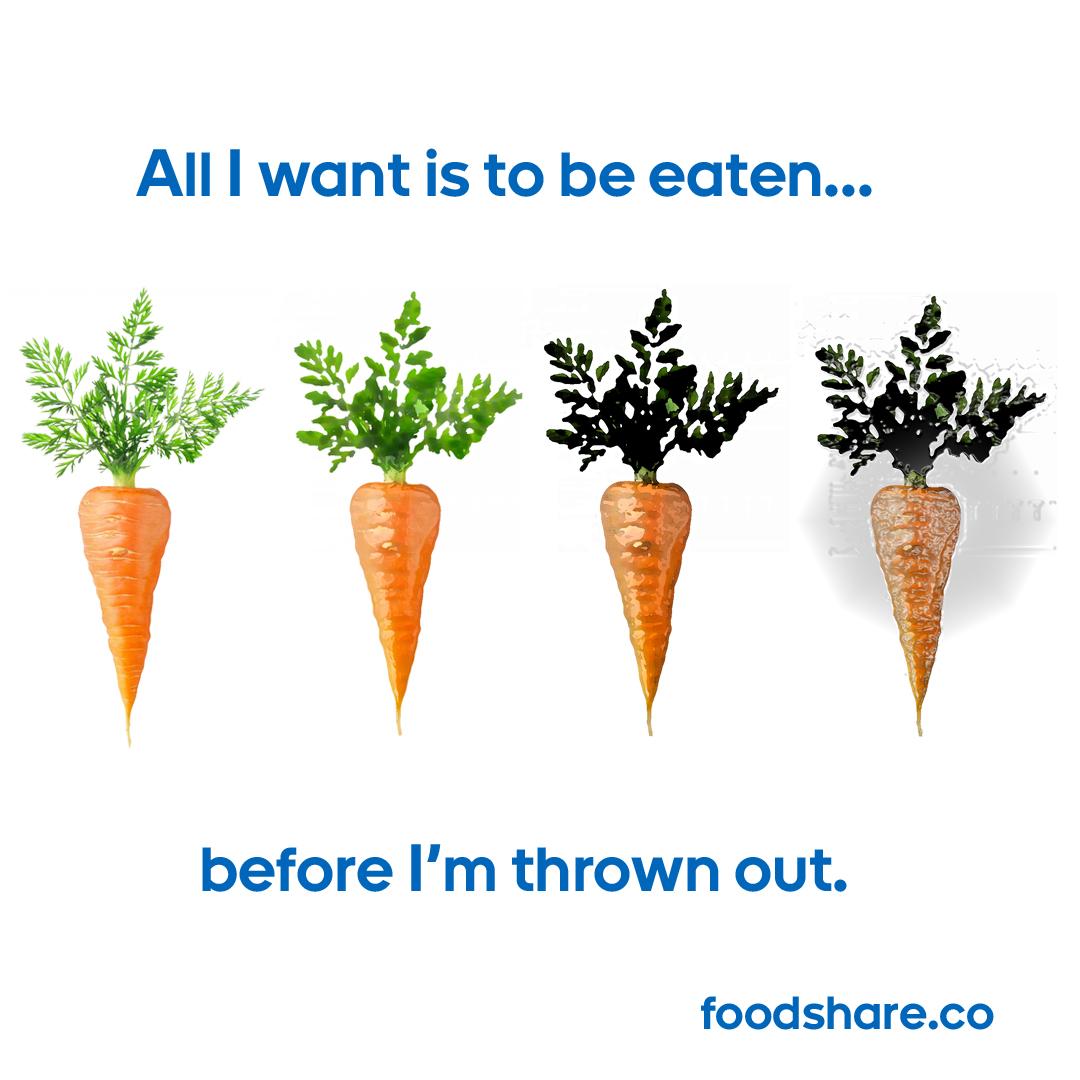
"All I want is to be eaten... before I'm thrown out."
The Perishable Spoilage Clock (2016 Campaign Artifact): Unlike palletized dry goods, prepared restaurant food operates on a strict biological countdown. With less than 2% of edible surplus rescued and 85% sent to landfills, any platform that cannot coordinate supply, transport, and shelter intake before the fourth stage of decay loses the asset to landfill methane.
Founder-Led Discovery: Gap Analysis & The Fiscal Math of Donating vs. Trashing
Conducting a competitive gap analysis revealed why traditional food banks couldn't solve this: legacy rescue operations are built around heavy box trucks and pallet-sized warehouse pickups, leaving local establishments with 5 to 20 lbs of daily surplus completely unserved. Furthermore, interviewing restaurant owners and food bank managers exposed the exact fiscal and operational trade-offs between Trashing vs. Donating:
End-of-Year Tax Math (PATH Act of 2015)
- Trashing Surplus Food (Taking a Loss)
- Standard COGS Write-Off Only: If a business trashes a case of food that cost $50 (with a $90 retail price), it only deducts the $50 base cost.
- Donating via FoodShare (The Strategic Winner)
- Enhanced Tax Deduction: Under the permanent PATH Act of 2015, businesses deduct the lesser of 2x base cost ($100) or base cost + 50% of profit margin (
$50 + $20 = $70)—yielding a $70 deduction (+40% fiscal benefit over trashing) plus lower dumpster weight fees.
Legal Liability Reality
- Trashing Surplus Food (Taking a Loss)
- Zero liability, which makes trashing feel "safe" to uninformed managers.
- Donating via FoodShare (The Strategic Winner)
- Full Federal Protection: Protected from civil and criminal liability under the Bill Emerson Good Samaritan Food Donation Act (1996) when donating wholesome food in good faith.
The Real Barrier (Why 85% Still Gets Trashed)
- Trashing Surplus Food (Taking a Loss)
- Path of Least Resistance: Takes 10 seconds to toss into a dumpster.
- Donating via FoodShare (The Strategic Winner)
- Logistical Friction & The "DoorDash Insight": Managers lack staff time to sort/transport small batches, fear liability, and told me bluntly in interviews: tax write-offs aren't enough—we stay on 3rd-party platforms for new customer acquisition.
| Business Dimension | Trashing Surplus Food (Taking a Loss) | Donating via FoodShare (The Strategic Winner) |
|---|---|---|
| End-of-Year Tax Math (PATH Act of 2015) | Standard COGS Write-Off Only: If a business trashes a case of food that cost $50 (with a $90 retail price), it only deducts the $50 base cost. | Enhanced Tax Deduction: Under the permanent PATH Act of 2015, businesses deduct the lesser of 2x base cost ($100) or base cost + 50% of profit margin ($50 + $20 = $70)—yielding a $70 deduction (+40% fiscal benefit over trashing) plus lower dumpster weight fees. |
| Legal Liability Reality | Zero liability, which makes trashing feel "safe" to uninformed managers. | Full Federal Protection: Protected from civil and criminal liability under the Bill Emerson Good Samaritan Food Donation Act (1996) when donating wholesome food in good faith. |
| The Real Barrier (Why 85% Still Gets Trashed) | Path of Least Resistance: Takes 10 seconds to toss into a dumpster. | Logistical Friction & The "DoorDash Insight": Managers lack staff time to sort/transport small batches, fear liability, and told me bluntly in interviews: tax write-offs aren't enough—we stay on 3rd-party platforms for new customer acquisition. |
The "Aha!" Moment: To make donating just as effortless as throwing food away—and financially irresistible—FoodShare had to combine 30-second on-demand pickup with a new customer acquisition engine.
2. Ecosystem Architecture: The 4-Sided Marketplace & Hybrid Social Enterprise
"All projects are archetypes of a new successful fusion of resource efficiency, environmental sensitivity, attention to human well-being, and financial success that has been called 'Natural Capitalism.'"
Classic gig platforms like Uber, Lyft, and DoorDash are 3-sided marketplaces (Customer, Driver, Merchant). To solve the "Non-Profit Starvation Cycle" without relying on endless grant writing, I codified a Periodic Table of 4 User Roles (Fd, Fi, Fv, Fr) orchestrated by a dual-entity API gateway:
FoodShare.co(The For-Profit SaaS & Patron Engine): Powered by Next.js Serverless Functions, Prisma ORM, Stripe B2B subscriptions, and PostgreSQL. Donors pay a monthly SaaS fee tiered by business size to unlock official physical storefront badging ("Donates Unused Food to Those in Need"), automated annual tax/CSR statements, placement in the Patron Discovery Marketplace, and a "DoorDash-Lite" on-demand delivery service where a percentage of every full-price Patron food order directly subsidizes free rescue logistics.FoodShare.work/.org(The 501(c)(3) Logistical Engine): Powered by Node.js (Fastify), Redis geospatial caching, and Supabase Realtime WebSockets. Manages high-frequency driver telemetry, Good Samaritan liability tracking, and atomic rescue dispatch for establishments contributing even 5 lbs of food a week.
Cycle held
Stage 1 — Surplus Food Posted (Or Predicted by AI)
Restaurants post 5+ lb batches in 30s · 24h ARIMA forecast
Stage 1 — Surplus Food Posted (Or Predicted by AI). Restaurants post 5+ lb batches in 30s · 24h ARIMA forecast
- Sustenance
- Capital
- Telemetry
- Hub
01Ingress
02Gateway
FoodShare.co (For-Profit SaaS & Patron Engine)
NEW CUSTOMER ACQUISITION · B2B SAAS · PATRON PERKS
FoodShare.work (501c3 Logistics & AI Engine)
FREE LAST-MILE DISPATCH · REDIS GEO-LOCKS · 24H AI FORECAST
03Core
.co (Profit) | .work (501c3)
4-WAY ATOMIC LOCK (30s Redis Geo-Lock)
04Orchestration
05Beneficiaries
The 3-Loop Value Exchange Matrix
"To make a difference, become a Patron and support FoodShare businesses by purchasing at their establishment. If we want a voice in the modern times, we need to put our wallets where our minds and mouths are."
Every stakeholder node exchanges value across three color-coded system channels (Green = Physical Sustenance, Blue = Economic Capital, Orange = Telemetry & Status):
1. Donors (Fd) (Restaurants, Markets, Schools/Venues)
- System Archetype
- The ROI-Driven Business
- What They Give (Input)
- Green Surplus food (from 5 lbs/wk up) tagged by macro-category (Protein, Carb, Produce) + size-tiered monthly SaaS fee.
- What They Get (Incentive Alignment)
- Blue New Customer Acquisition from Patrons + physical storefront window badging. Orange Automated PATH Act Tax ID receipts & CSR media statements.
2. Patrons (Fi) (Conscious Consumers)
- System Archetype
- The Wallet Voter (Capital Engine)
- What They Give (Input)
- Blue Dining spend at Donor venues, paid delivery fees, feedback/appreciation, & $10/$25/$50 pledges.
- What They Get (Incentive Alignment)
- Blue Storefront 2-for-1s and 5%–15% discounts. Orange Real-time restaurant waste-saved tracking, leaderboards, & city-expansion voting.
3. Volunteers (Fv) (Last-Mile Fleet)
- System Archetype
- The Time-Poor Altruist
- What They Give (Input)
- Green 20–30 minute hyper-local pickup and delivery execution.
- What They Get (Incentive Alignment)
- Orange Quantified Dopamine Hit ("Feed up to 100 people per hour") + official accreditation pin. Blue Donor coupons + $50 reward unlocked via sweat-equity.
4. Recipients (Fr) (Shelters, Food Banks, Churches)
- System Archetype
- The Community Partner (Dignified Demand)
- What They Give (Input)
- Orange Real-time storage capacity & intake confirmation via dedicated tablet.
- What They Get (Incentive Alignment)
- Green A curated "Menu" instead of a mystery dumping box (targeted protein/produce) + automated annual Donor weight/value tax statements.
| Stakeholder Node | System Archetype | What They Give (Input) | What They Get (Incentive Alignment) |
|---|---|---|---|
1. Donors (Fd) (Restaurants, Markets, Schools/Venues) | The ROI-Driven Business | Green Surplus food (from 5 lbs/wk up) tagged by macro-category (Protein, Carb, Produce) + size-tiered monthly SaaS fee. | Blue New Customer Acquisition from Patrons + physical storefront window badging. Orange Automated PATH Act Tax ID receipts & CSR media statements. |
2. Patrons (Fi) (Conscious Consumers) | The Wallet Voter (Capital Engine) | Blue Dining spend at Donor venues, paid delivery fees, feedback/appreciation, & $10/$25/$50 pledges. | Blue Storefront 2-for-1s and 5%–15% discounts. Orange Real-time restaurant waste-saved tracking, leaderboards, & city-expansion voting. |
3. Volunteers (Fv) (Last-Mile Fleet) | The Time-Poor Altruist | Green 20–30 minute hyper-local pickup and delivery execution. | Orange Quantified Dopamine Hit ("Feed up to 100 people per hour") + official accreditation pin. Blue Donor coupons + $50 reward unlocked via sweat-equity. |
4. Recipients (Fr) (Shelters, Food Banks, Churches) | The Community Partner (Dignified Demand) | Orange Real-time storage capacity & intake confirmation via dedicated tablet. | Green A curated "Menu" instead of a mystery dumping box (targeted protein/produce) + automated annual Donor weight/value tax statements. |
Architectural Nuance: Role-Based Design & Cross-Side Network Effects (Volunteer ↔ Patron)
While the Volunteer and the Patron can often be the same person, I intentionally architected them as distinct system roles because their operational constraints differ (Volunteers spend Time & Mobility for logistics; Patrons spend Capital for consumption). Keeping the roles structurally distinct prevented UI cognitive overload while enabling Cross-Side Network Effect gamification loops:
- Volunteer → Patron Conversion: Completing a rescue run unlocks a 20% Patron discount coupon for lunch at the exact Donor restaurant the volunteer just served.
- Patron → Volunteer Conversion: Ordering dinner from a partner café prompts the diner: "The Corner Bakery donates 50 lbs of food a week—claim a 20-minute rescue run next time you're nearby!"
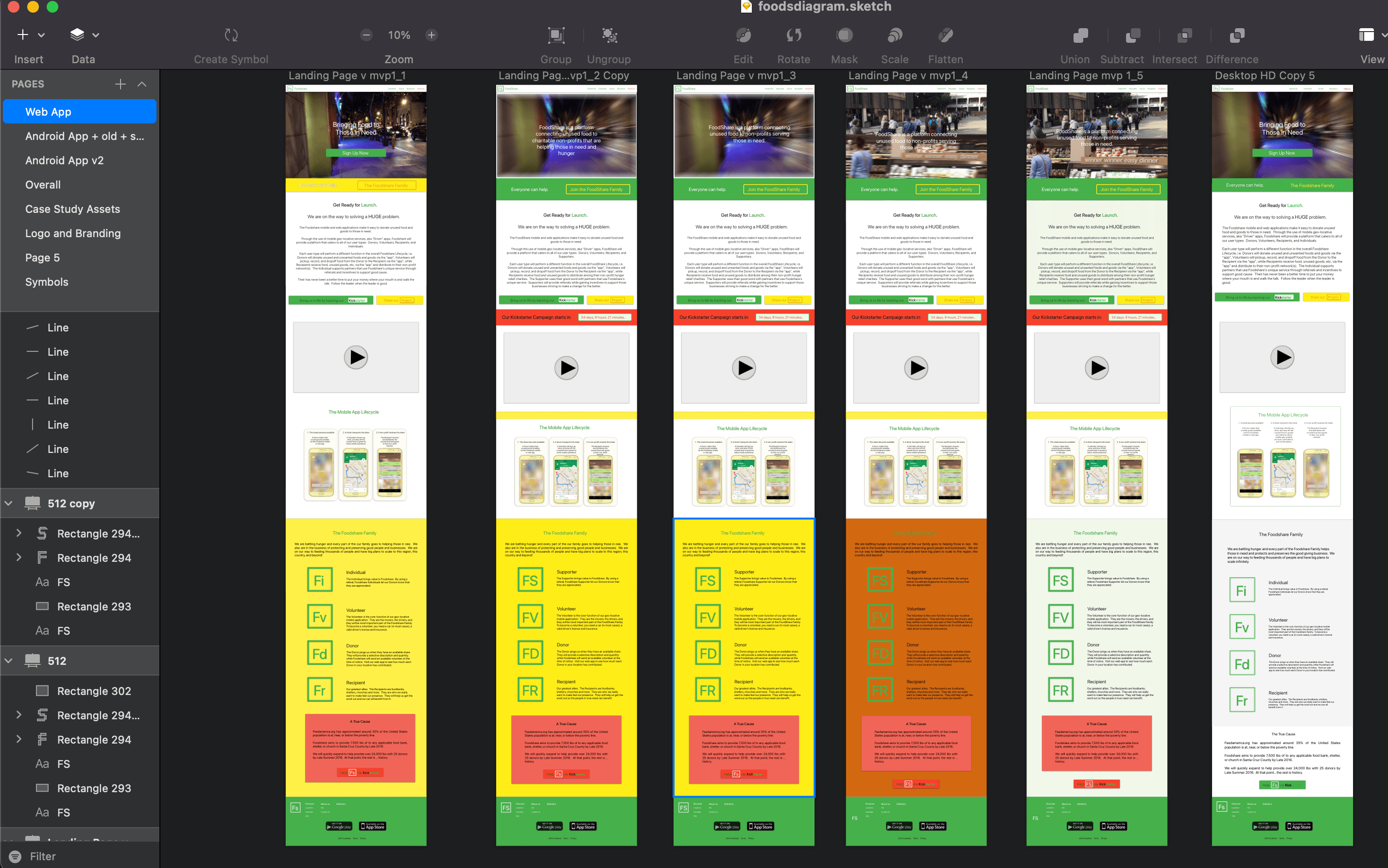
foodsdiagram.sketch: Six side-by-side full-height web app iterations (Landing Page v mvp1_1 through Desktop HD Copy 5) testing color-contrast hypotheses (yellow → burnt orange → high-contrast white) and codifying the Periodic Table of Roles (Fi, Fv, Fd, Fr).3. Interaction Design & Native Android Architecture (v0.2.3 Flow Map)
Because Time-Poor Altruist volunteers are the logistical lynchpin, the v0.2.3 flow had to be push-based and executable in under 30 seconds—evolving the SafeDeliver Android lifecycle (SplashScreen, login-signup-Activity.java, Recycler/adapter/View, hasAddress -> openMapDriveTo) into a state machine that refuses a run until Loc, Bag, and Gas are real. A Fitts's Law thumb bar steps Dashboard → Triage → Pickup → Double-Action Confirm → Delivery Handshake → Impact, with a breathing somatic UI for heads-up driving and a 1 lb = 10 people receipt you can step on the handset below.
01
Loc, Bag, Gas
firebase_auth gate before a driver enters the pool.
02
Breathing UI
Somatic minimum expands to a <3s map triage.
03
Cognitive Justice
Thumb bar plus a double-action pickup confirm.
04
1 lb = 10 people
Impact receipt replaces a sterile end-of-shift.
FOODSHARE.WORK
v0.2.3
Pilot's Checklist
- READYLoc
- READYBag
- READYGas
firebase_auth held until Loc, Bag, and Gas are confirmed.
01Dashboard & Auth
firebase_auth + Mandatory "Loc, Bag, Gas" Check-In
SplashScreen → login-signup-Activity.java
Native Android lifecycle · v0.2.3
6-Step Micro-Volunteering
Step 01 is live in the handset: firebase_auth + Mandatory "Loc, Bag, Gas" Check-In.
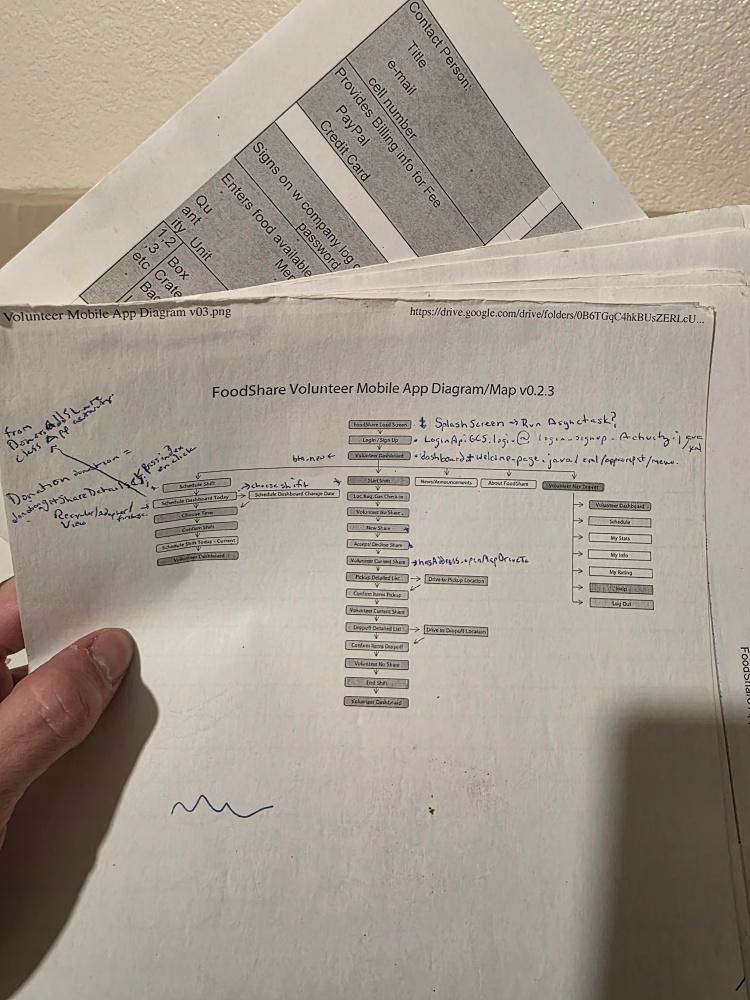
Loc, Bag, Gas Check-in node and handwritten Java/XML lifecycle annotations (Run Asynctask?, login-signup-Activity.java, Recycler/adapter/View).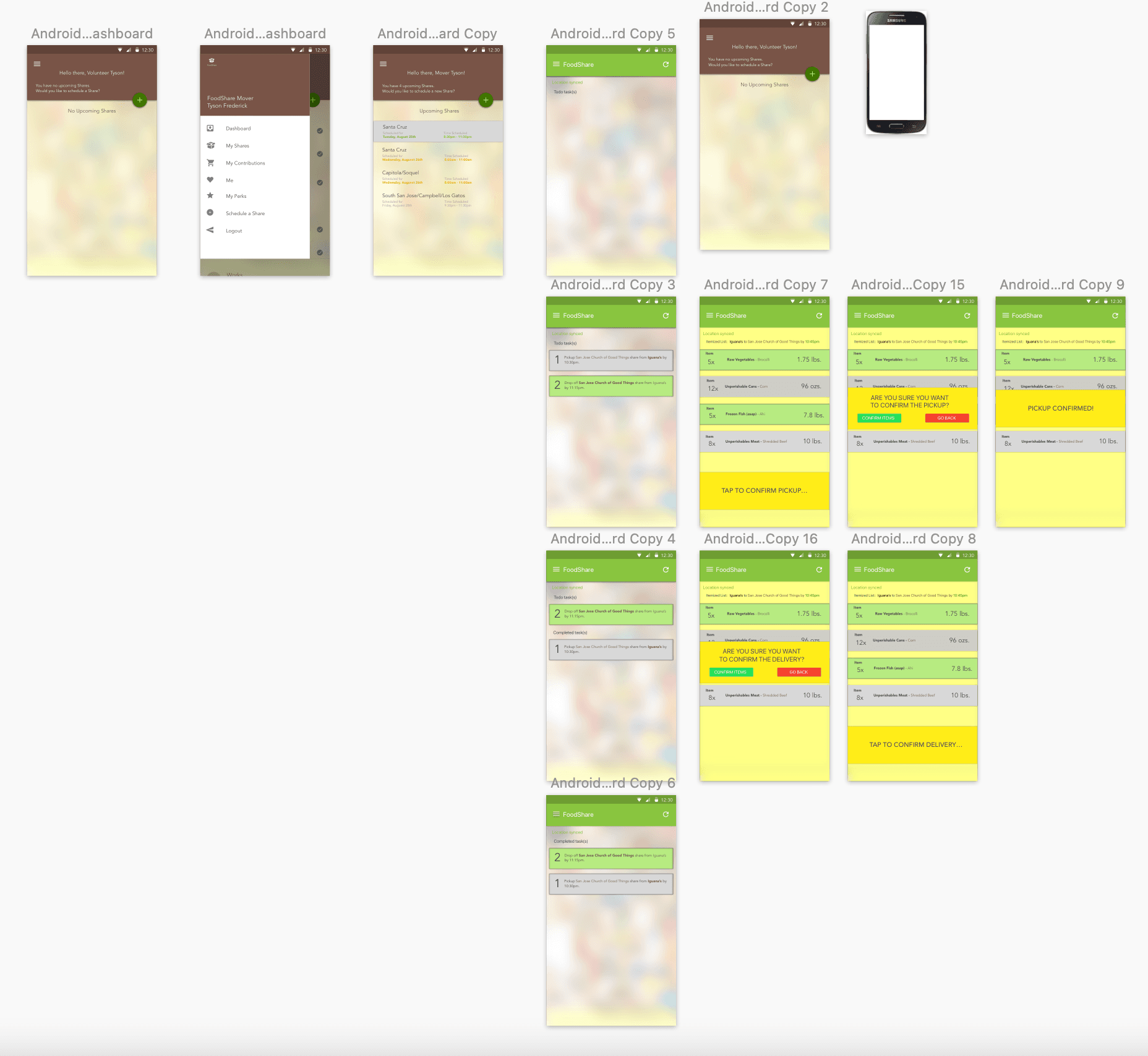
foodsdiagram.sketch vector artboard canvas (Android...ashboard through Copy 16) showing the bottom-anchored Fitts's Law action bars and mistake-proof confirmation modals.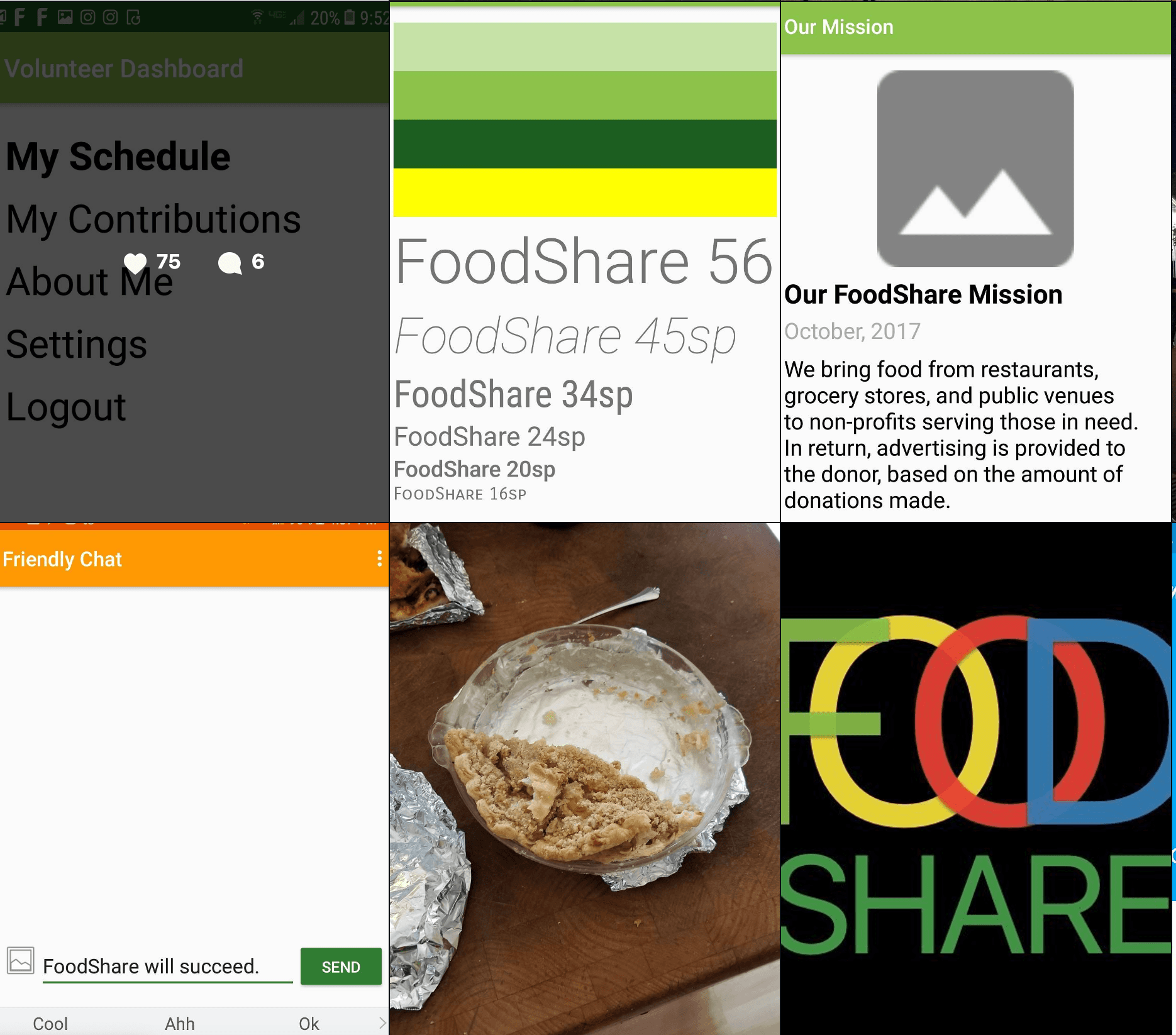
Volunteer Dashboard navigation drawer, Material Design 56sp–16sp typography scale, and Firebase FriendlyChat test payload ("FoodShare will succeed.").4. Production Backend: The Atomic 4-Way Handshake & 2026 AI Retrofit
"The software will only allow for the transaction to be approved upon having all of our roles available at the same time... Tablet to receive and confirm available shares and access dashboard (only when a share, driver, and recipient is available)."
To prevent race conditions (for example, two volunteers simultaneously claiming the same 10 lbs of beef at Iguana's in downtown San Jose) and eliminate manual coordination, I evolved my 2016 synchronous availability rule into a distributed transaction engine paired with a 3-pillar 2026 AI & Telemetry Retrofit:
1. The 4-Way Handshake Engine (Redis Geospatial Atomic Locks + PostGIS)
A rescue share cannot be finalized unless four real-world dependencies align simultaneously:
- Geospatial Indexing: When a Donor posts surplus, the item is written to a Redis geospatial index (
GEOADD available_shares longitude latitude share_id) asPENDING_MATCH. - 30-Second Atomic Lock: When a volunteer taps claim, the matching engine establishes an isolated Redis distributed lock (
SET lock:share_id volunteer_id NX PX 30000), granting a strict 30-second window to validate the matrix. - Snapshot Isolation Check: Inside a single PostgreSQL/PostGIS transaction (
USING gist (location)), the engine verifies: (a) Donor item unexpired/unallocated, (b) Volunteer authenticated inside the geo-fenced block, (c) Recipient shelter inbound queue below max capacity, and (d) Patron sponsorship slot active. If all four pass, the state commits toSCHEDULED; if any check fails, it safely rolls back without dropping telemetry.
Production PostgreSQL / PostGIS Core Schema Excerpt — Click to Expand/Collapse SQL (27 Lines)
CREATE TYPE user_role AS ENUM ('donor', 'volunteer', 'recipient', 'patron');
CREATE TYPE share_status AS ENUM ('pending_match', 'scheduled', 'en_route_pickup', 'picked_up', 'delivered', 'cancelled');
CREATE TYPE food_category AS ENUM ('raw_vegetables', 'unperishable_cans', 'unperishable_meat', 'baked_goods', 'prepared_meals');

CREATE TABLE shares (
  id UUID PRIMARY KEY DEFAULT gen_random_uuid(),
  donor_id UUID REFERENCES organizations(id) NOT NULL,
  recipient_id UUID REFERENCES organizations(id),
  volunteer_id UUID REFERENCES users(id),
  status share_status NOT NULL DEFAULT 'pending_match',
  pickup_deadline TIMESTAMPTZ NOT NULL,
  dropoff_deadline TIMESTAMPTZ NOT NULL,
  created_at TIMESTAMPTZ DEFAULT now(),
  updated_at TIMESTAMPTZ DEFAULT now()
);

CREATE TABLE share_items (
  id UUID PRIMARY KEY DEFAULT gen_random_uuid(),
  share_id UUID REFERENCES shares(id) ON DELETE CASCADE NOT NULL,
  category food_category NOT NULL,
  item_name TEXT NOT NULL,
  quantity INT NOT NULL CHECK (quantity > 0),
  weight_lbs NUMERIC(6, 2) NOT NULL CHECK (weight_lbs > 0.00)
);

CREATE INDEX idx_org_location ON organizations USING gist (location);
CREATE INDEX idx_shares_status ON shares (status);
2. The 2026 AI & Operational Telemetry Matrix
Informed by my frontline experience auditing physical-to-digital inventory exceptions at Amazon's SCK4 Inbound Cross-Dock, the 2026 architecture replaces manual triage with three automated pipelines:
1. Predictive Logistics Engine
- Core Operational Problem
- Reactive last-mile alerts cause missed pickups and spoiled food.
- Technical Architecture
- Apache Kafka telemetry ingest + Python ARIMA time-series regression computing spatial probability density (V_pred) 24 hours in advance ("Virtual Donations").
- Target Impact Metric
- +20% increase in lbs of food rescued per volunteer hour.
2. Generative Engagement & Nutritional Matching
- Core Operational Problem
- Volunteer churn from generic alerts & shelters getting buried in carbs instead of protein.
- Technical Architecture
- Supabase (
pgvector) Bipartite Matching routing protein/produce to food deserts + asynchronous webhook triggering LLM/NLG personalized Impact Cards (Weight × 10 People Fed). - Target Impact Metric
- -15% reduction in 90-day volunteer churn rate.
3. Epistemic Telemetry & SROI Dashboard
- Core Operational Problem
- Biased 5-star ratings cause friction; non-profits spend hundreds of hours on grant reports.
- Technical Architecture
- WebSocket GPS tracking verifying Haversine distance (D ≤ 50 meters) for zero-input drop-off confirmation + NLP corporate Social Return on Investment (SROI) reporting (CO₂ averted, meals funded).
- Target Impact Metric
- -50% reduction in staff reporting time & zero rating bias.
| System Pillar | Core Operational Problem | Technical Architecture | Target Impact Metric |
|---|---|---|---|
| 1. Predictive Logistics Engine | Reactive last-mile alerts cause missed pickups and spoiled food. | Apache Kafka telemetry ingest + Python ARIMA time-series regression computing spatial probability density (V_pred) 24 hours in advance ("Virtual Donations"). | +20% increase in lbs of food rescued per volunteer hour. |
| 2. Generative Engagement & Nutritional Matching | Volunteer churn from generic alerts & shelters getting buried in carbs instead of protein. | Supabase (pgvector) Bipartite Matching routing protein/produce to food deserts + asynchronous webhook triggering LLM/NLG personalized Impact Cards (Weight × 10 People Fed). | -15% reduction in 90-day volunteer churn rate. |
| 3. Epistemic Telemetry & SROI Dashboard | Biased 5-star ratings cause friction; non-profits spend hundreds of hours on grant reports. | WebSocket GPS tracking verifying Haversine distance (D ≤ 50 meters) for zero-input drop-off confirmation + NLP corporate Social Return on Investment (SROI) reporting (CO₂ averted, meals funded). | -50% reduction in staff reporting time & zero rating bias. |
5. Venture Economics, Growth Telemetry & The 2017–2026 Architectural Evolution
A four-sided marketplace cannot scale globally on day one; it requires localized Marketplace Liquidity across all four nodes simultaneously. In my original Kickstarter specification, I engineered a transparent $100,000 Cap-Ex / Op-Ex Venture Budget paired with a 3-Phase Geo-Fenced Rollout Strategy and empirical A/B Paid Acquisition Testing:
1. The $100,000 0-to-1 Venture Allocation & Dedicated Hardware Fleet
Rather than assuming busy restaurant cooks or shelter workers would use personal phones on the line, I budgeted $10,000 for a dedicated fleet of kitchen/shelter Android tablets pre-configured to wake and alert staff only when the 4-Way Handshake condition (Share + Driver + Recipient) was active:
Core App Engineering
$40,000 (40%)
- Strategic & Technical Deliverables
- Native mobile (Android/iOS), web platform, and 4-role dashboard development.
UX/UI & Systems Design
$15,000 (15%)
- Strategic & Technical Deliverables
- Multi-sided interaction design across Web, Mobile, and Partner Dashboards.
Backend & Spatial Infrastructure
$15,000 (15%)
- Strategic & Technical Deliverables
- Database architecture, geospatial matching, Tax ID ledger, and server maintenance.
Hardware Tablet Fleet & GTM
$10,000 (10%)
- Strategic & Technical Deliverables
- Dedicated fleet of Donor/Recipient Android tablets + local B2B/B2C marketing.
Sweat-Equity Rewards & Platform Fees
$20,000 (20%)
- Strategic & Technical Deliverables
- $10k Kickstarter/volunteer reward packages (unlockable via volunteer hours) + $10k transaction fees.
| Budget Allocation | Amount ($100,000 Total) | Strategic & Technical Deliverables |
|---|---|---|
| Core App Engineering | $40,000 (40%) | Native mobile (Android/iOS), web platform, and 4-role dashboard development. |
| UX/UI & Systems Design | $15,000 (15%) | Multi-sided interaction design across Web, Mobile, and Partner Dashboards. |
| Backend & Spatial Infrastructure | $15,000 (15%) | Database architecture, geospatial matching, Tax ID ledger, and server maintenance. |
| Hardware Tablet Fleet & GTM | $10,000 (10%) | Dedicated fleet of Donor/Recipient Android tablets + local B2B/B2C marketing. |
| Sweat-Equity Rewards & Platform Fees | $20,000 (20%) | $10k Kickstarter/volunteer reward packages (unlockable via volunteer hours) + $10k transaction fees. |
2. The 3-Phase "Bowling Pin" Liquidity Roadmap
- Phase 1 — Santa Cruz County & Silicon Valley Alpha (
1,000 lbs/wkTarget): Designed around two structured test phases across Santa Cruz County (Santa Cruz, Capitola, Soquel) and Silicon Valley (Winter 2016 – Fall 2017) to connect an initial alpha cohort of 25 restaurants, 5 markets, and 3 public venues/schools rescuing 1,000 lbs of food per week (4,000 lbs/month). - Phase 2 — Version 1.0 & South Bay Expansion (
10,000 lbs/wkTarget): Scaling to 10,000 lbs/week (40,000+ lbs/month) across South San Jose, Campbell, and Santa Clara ($500k stretch goal), validated publicly through an exhibition at the Bay Area Maker Faire and 3D spatial concept visualization methodologies. - Phase 3 — Crowdsourced West Coast Expansion & The 2026 AI Retrofit: Empowering Patrons to vote in-app on which target city (San Francisco, Seattle, Reno, Lake Tahoe, Eugene, or Salt Lake City) unlocks the next physical orientation hub for every $250k milestone—now architected for autonomous scale on Next.js, Vercel, Redis, and Supabase.
3. Pre-Launch Growth Engineering: 60-Day Sprint, Google Analytics, SEO & Micro-Budget A/B Testing (2016–2017)
During a concentrated two-month pre-launch growth sprint, I treated customer and partner acquisition as an empirical engineering problem—wiring foodshare.co and foodshare.co/partner.html into Google Analytics (Active Users real-time funnel tracking), optimizing search-index SEO keywords around food insecurity and commercial waste, and running structured A/B paid acquisition experiments across Facebook and Instagram/X (@foodshareco):
Cohort 1A (Mar 9, 2017)
$3.89
- Ad Format & Targeting Hook
- Boosted Content Post (Emotional Hook: "Scary stuff out there...")
- Empirical Telemetry Result
- 441 Reached • 29 Post Engagements ($0.13 / engagement)
- Strategic GTM Takeaway
- High emotional resonance and comment/like velocity for B2C Volunteer/Patron awareness.
Cohort 1B (Mar 9, 2017)
$7.53 ($3/day)
- Ad Format & Targeting Hook
- Local Business Promotion (Product Hook: "Our on-demand mobile and web apps help businesses...")
- Empirical Telemetry Result
- 2,969 Reached • 3,157 Local Impressions ($2.38 CPM)
- Strategic GTM Takeaway
- 6.7x more local reach than standard posts; proved hyper-local radius targeting is the most capital-efficient way to acquire Donors.
Cohort 2A (Oct 21, 2017)
$2.00
- Ad Format & Targeting Hook
- Boosted Content Post (Status Hook: "BACK and GOING at FoodShare...")
- Empirical Telemetry Result
- 104 Reached • 3 Post Engagements
- Strategic GTM Takeaway
- Confirmed generic status updates underperform without a localized utility hook.
Cohort 2B (Oct 21, 2017)
$3.99 ($2/day)
- Ad Format & Targeting Hook
- Local Business Promotion (CTA Hook: "Connect for good — On-demand mobile apps...")
- Empirical Telemetry Result
- 1,623 Reached • 1,635 Local Impressions ($2.44 CPM)
- Strategic GTM Takeaway
- Replicated Cohort 1B's sub-$2.50 CPM efficiency (15.6x reach multiplier over Variant 2A), validating the geo-fenced "Bowling Pin" launch model.
| 2017 Cohort & Experiment Variant | Ad Format & Targeting Hook | Micro-Spend | Empirical Telemetry Result | Strategic GTM Takeaway |
|---|---|---|---|---|
| Cohort 1A (Mar 9, 2017) | Boosted Content Post (Emotional Hook: "Scary stuff out there...") | $3.89 | 441 Reached • 29 Post Engagements ($0.13 / engagement) | High emotional resonance and comment/like velocity for B2C Volunteer/Patron awareness. |
| Cohort 1B (Mar 9, 2017) | Local Business Promotion (Product Hook: "Our on-demand mobile and web apps help businesses...") | $7.53 ($3/day) | 2,969 Reached • 3,157 Local Impressions ($2.38 CPM) | 6.7x more local reach than standard posts; proved hyper-local radius targeting is the most capital-efficient way to acquire Donors. |
| Cohort 2A (Oct 21, 2017) | Boosted Content Post (Status Hook: "BACK and GOING at FoodShare...") | $2.00 | 104 Reached • 3 Post Engagements | Confirmed generic status updates underperform without a localized utility hook. |
| Cohort 2B (Oct 21, 2017) | Local Business Promotion (CTA Hook: "Connect for good — On-demand mobile apps...") | $3.99 ($2/day) | 1,623 Reached • 1,635 Local Impressions ($2.44 CPM) | Replicated Cohort 1B's sub-$2.50 CPM efficiency (15.6x reach multiplier over Variant 2A), validating the geo-fenced "Bowling Pin" launch model. |
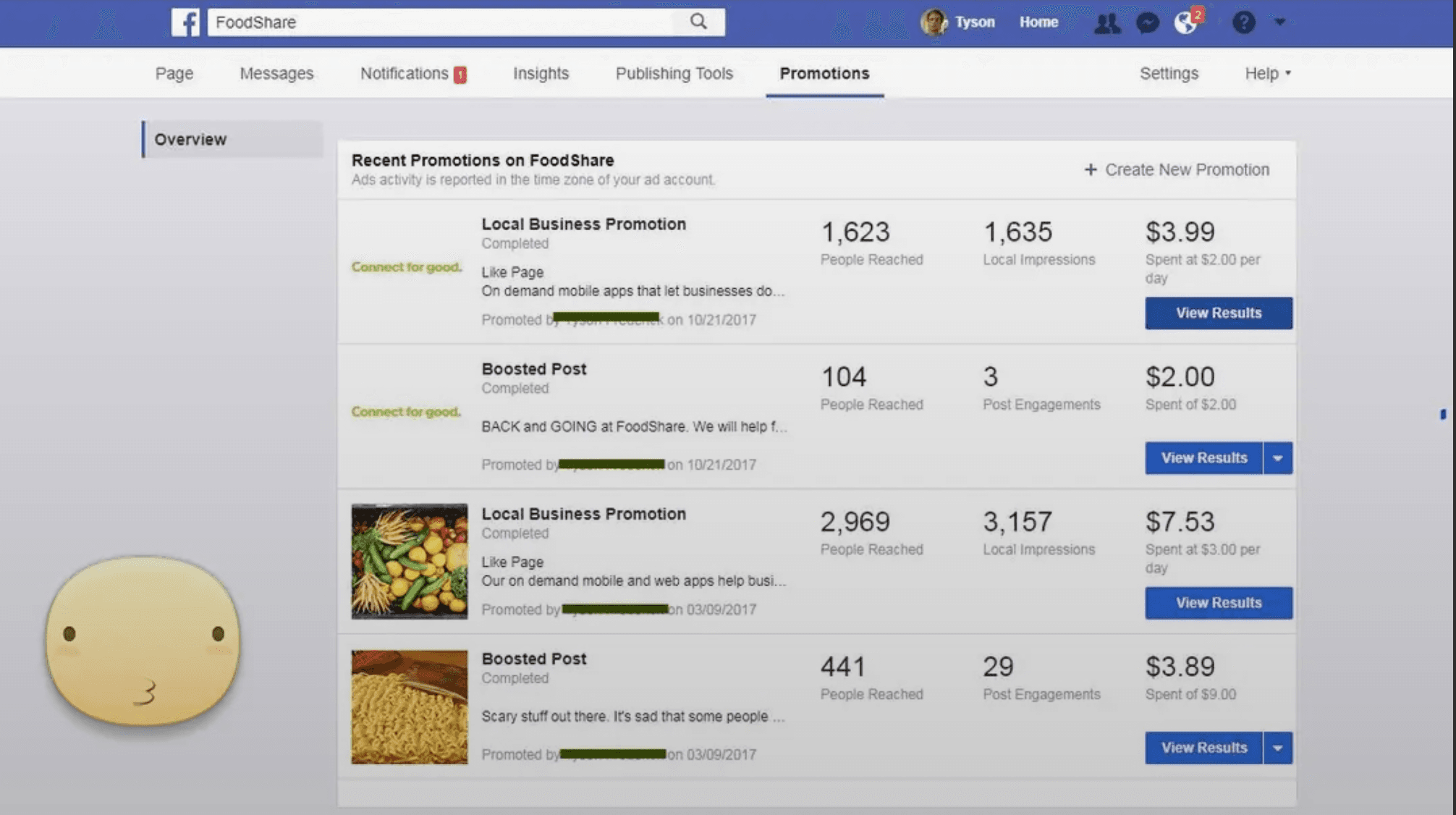
Active Users) real-time funnel tracking.- Total Micro-Test Efficiency & Institutional Validation: Across just $17.41 in validation ad spend, the campaigns reached 5,137 local users and generated 4,792+ targeted local impressions (~$2.40 CPM), building a pre-launch community of 508 followers on Instagram and 70 followers on Facebook—and organically attracting verified institutional followers including Marc Perrone (International President of the 1.3-million-member United Food & Commercial Workers / UFCW union representing grocery and food-retail workers across North America) and StartUp Mindset (Top 50 Entrepreneurship publication).
4. The 2018–2021 Caregiving Pivot & The Somatic UI Continuum
In late 2017—right as the 60-day GTM sprint concluded and the $100,000 Kickstarter campaign awaited its final launch video—life circumstances required an immediate, decisive pivot:
- Stepping Away for End-of-Life Care & Zero-UI Research (2018–2021): I placed the FoodShare Kickstarter launch on hold to move to Lake Tahoe as the full-time caregiver for my 81-year-old father battling advanced Parkinson's disease. Over those four years, as Parkinson's systematically degraded his physical motor control ("freezing" states), traditional screen interfaces became inaccessible—turning ambient voice assistants (Alexa and Google Home "Drop-In" lifelines) into his sole cyber-physical bridge to safety.
- Closing the Architectural Loop (2023–2026 — From Mobile & Voice to Spatial XR): That 4-year longitudinal study in Zero-UI / Voice accessibility and responsive microphone behaviors, followed by nearly three years auditing high-velocity physical-to-digital logistics telemetry and optical camera/scanner ergonomics at Amazon's SCK4 Inbound Cross-Dock, completed my Somatic UI Spectrum. Today, those hard-won lessons in ambient computing, heads-up multimodal orchestration, mistake-proof human factors, and industrial exception handling directly power FoodShare's 2026 Next.js, Redis, and Supabase Agentic Architecture.
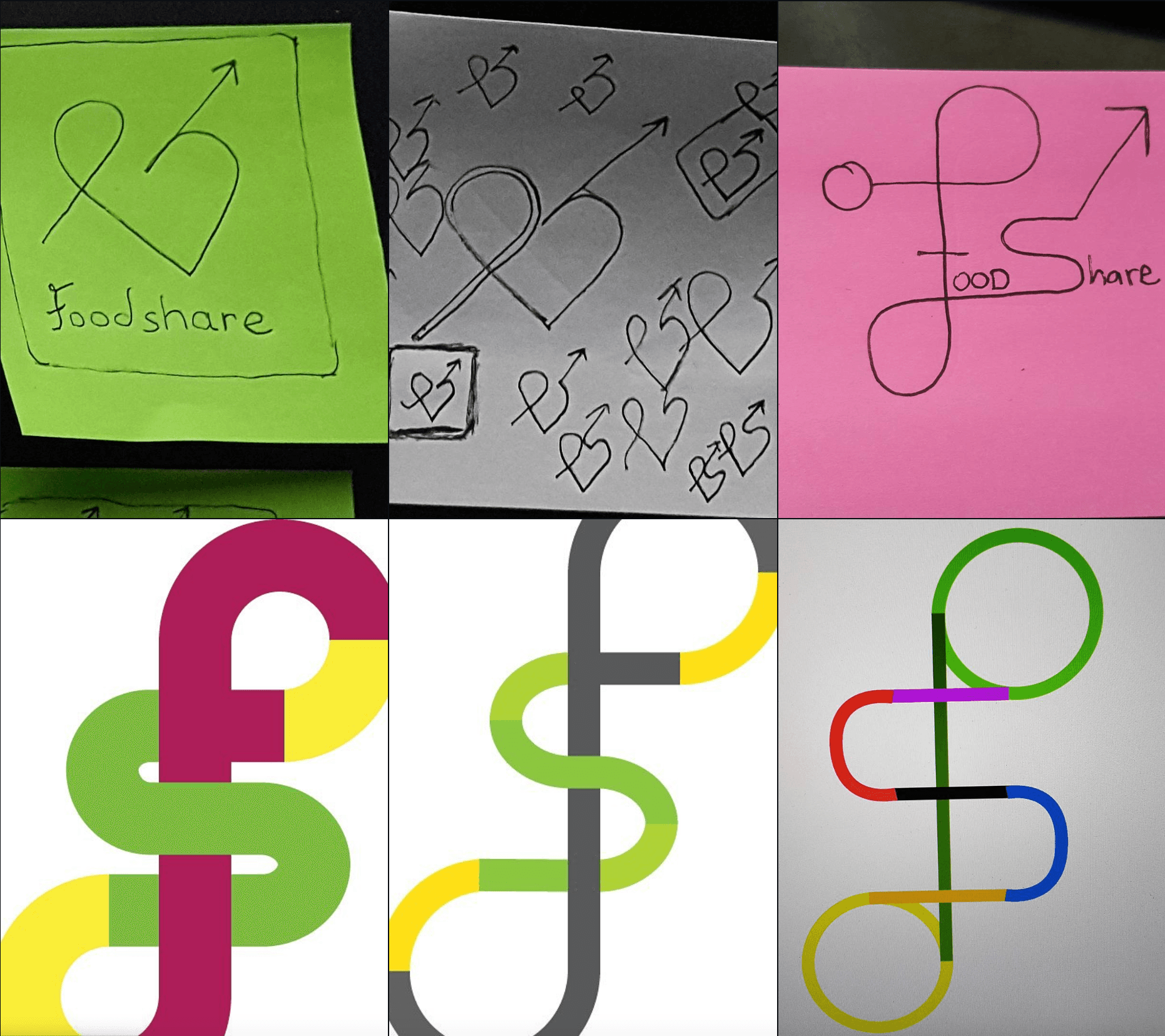
f/s ligature) to digital vector synthesis and the final 4-segment fs continuous ribbon (bottom row).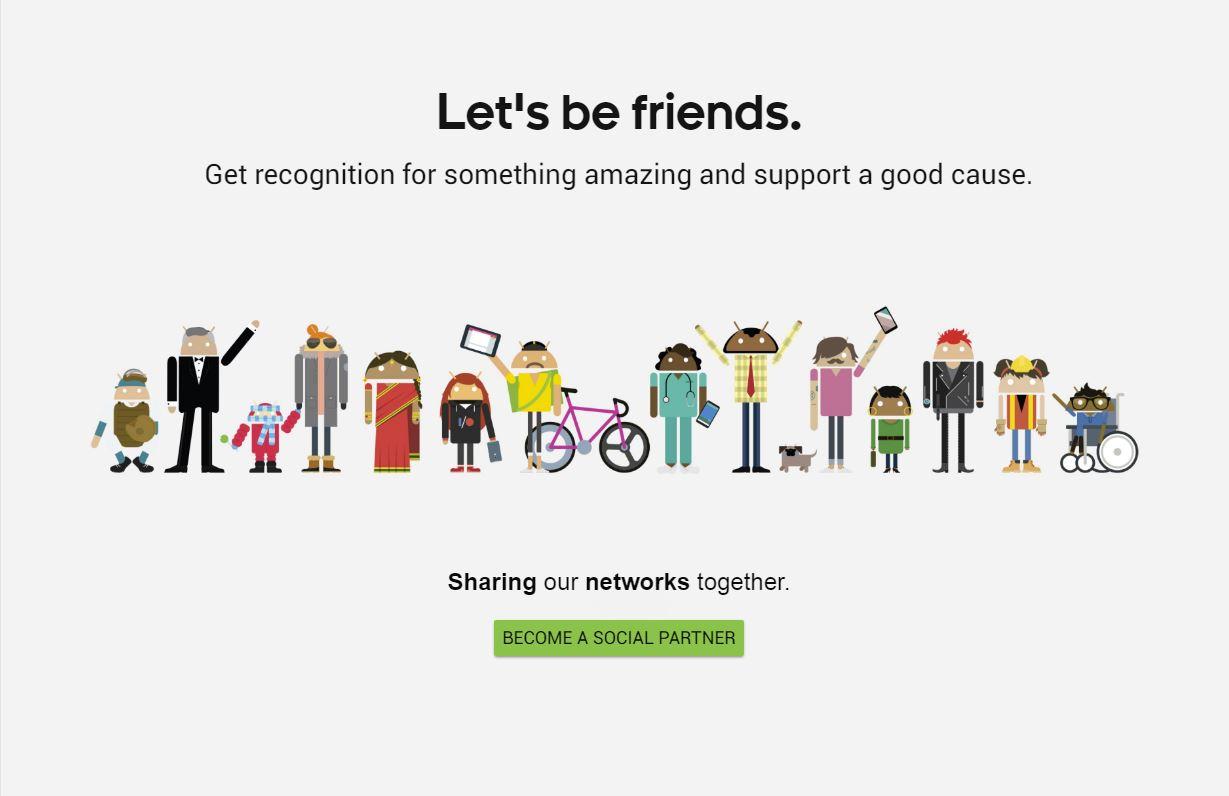
foodshare.co/partner.html community onboarding banner ("Let's be friends... Sharing our networks together") showcasing inclusive Material Design character illustration.